How to tell a spec home from a build-to-order home in satellite imagery
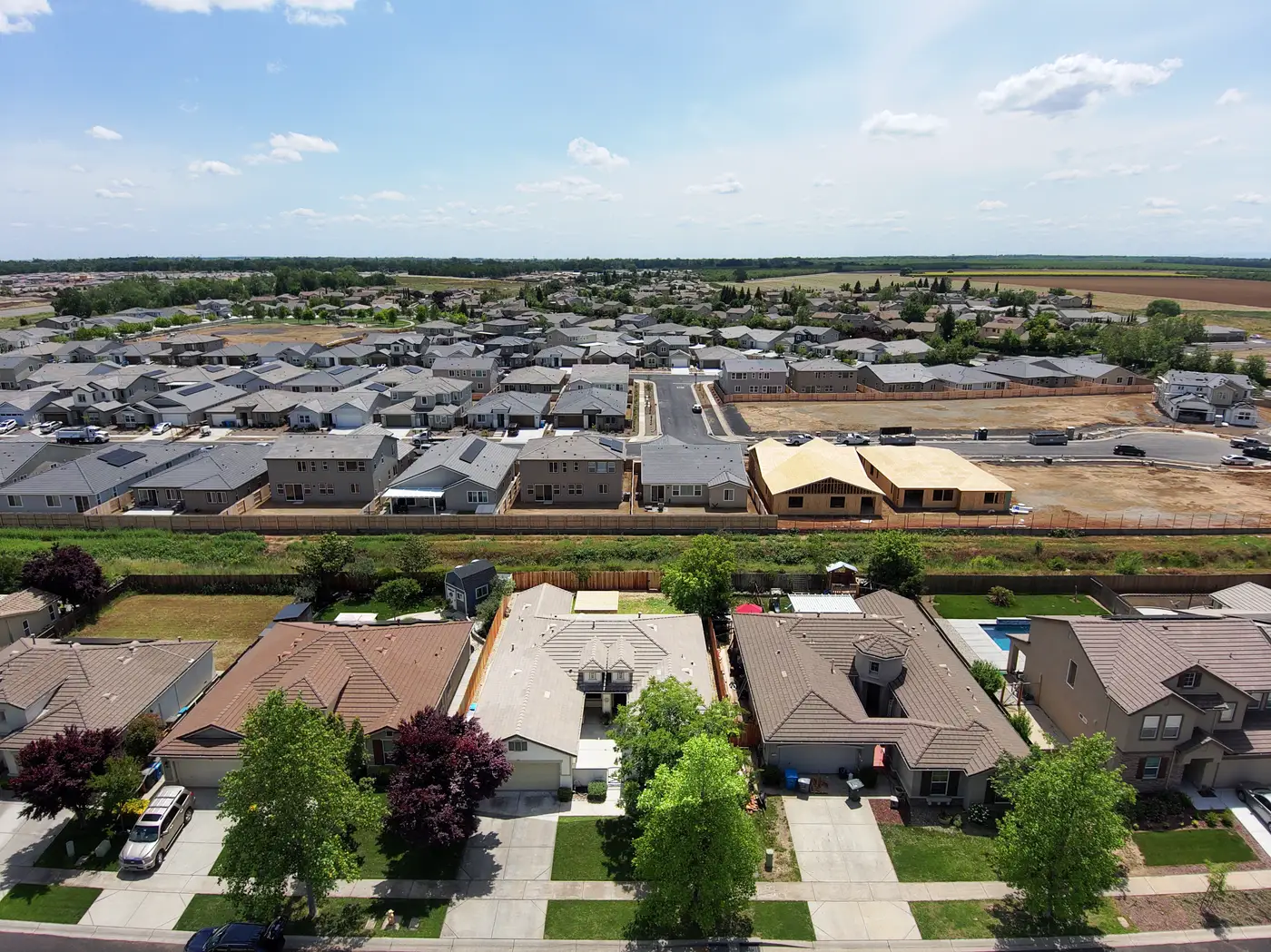
Every subdivision plat tells two different stories depending on who's paying for the lot. A production builder pours foundations ahead of sales, betting that buyers show up before the concrete cures. A custom or build-to-order shop waits for a signed contract first, then breaks ground on one lot while the rest of the section sits as raw dirt. From the ground, you'd need a plat map and a sales office visit to tell which story you're looking at. From repeat high-res passes, the pattern shows up in the sequencing itself.
Pour sequencing is the tell
Speculative single-family construction tends to move in batches. A production builder working a phased section will pour three, five, sometimes a dozen slabs in a single pass across adjacent lots, then frame them roughly in order, because crews and material deliveries are scheduled for volume, not for one buyer's closing date. Look at a platted section over three or four monthly passes and pads appear in clusters that track the street grid, not the order a buyer might pick lots in.
Build-to-order pace looks different on the same street. One pad goes in, isolated, often near the model home or sales trailer at the front of the section, while the lots around it stay vacant dirt for months. The next pour might be two sections over, on whatever lot closed escrow that quarter. There's no batch rhythm, because there's no inventory risk being carried. The builder is pouring against a signed contract, not a sales forecast.
Framing adds a second layer. A spec builder's frame crews move through a cluster on a tight schedule, so pads poured the same month tend to reach frame stage in a similar window too. A single lot framing alone in an otherwise empty block, months after neighboring pads went in, or with no neighboring pads at all, is a decent signal that it's a custom build rather than inventory.
What this means for starts pacing
None of this replaces a permit record, and it isn't meant to. Permit data tells you what was filed. It doesn't tell you what actually got poured, and it lags by weeks or months depending on the jurisdiction. What the pour-and-frame pattern gives an analyst is an early read on build-to-order homebuilder pace versus speculative pace in a submarket, before that permit data clears the pipeline.
That split matters for anyone modeling single-family starts pacing by metro. A submarket where pads are clustering and framing fast is carrying spec inventory, which shows up later as finished-home supply regardless of what buyer demand looks like that month. A submarket where pads are scattered and isolated is tracking signed contracts one at a time, which tends to be stickier and less sensitive to a builder pulling incentives. Lumping both patterns into one "starts" number flattens a distinction that drives how fast that supply clears.
The limits are worth naming plainly. A single monthly pass can't tell you the buyer's name on a build-to-order lot, and it can't confirm a model home is a model home rather than the first spec unit in a new phase. What it can do, read consistently across several passes, is separate batch-pour behavior from one-off pour behavior at the lot level, metro by metro, ahead of the county's permit release.
Construction Starts Index runs this as a monthly foundation and frame count, by metro and submarket, delivered as a map layer and a CSV, so the pattern described above is something you can pull for a specific submarket instead of eyeballing a single pass yourself.
If you're trying to separate spec pipeline from build-to-order pace in a metro you're underwriting, the index is built for exactly that read.