Model home vs. housing start: what the Census count actually captures
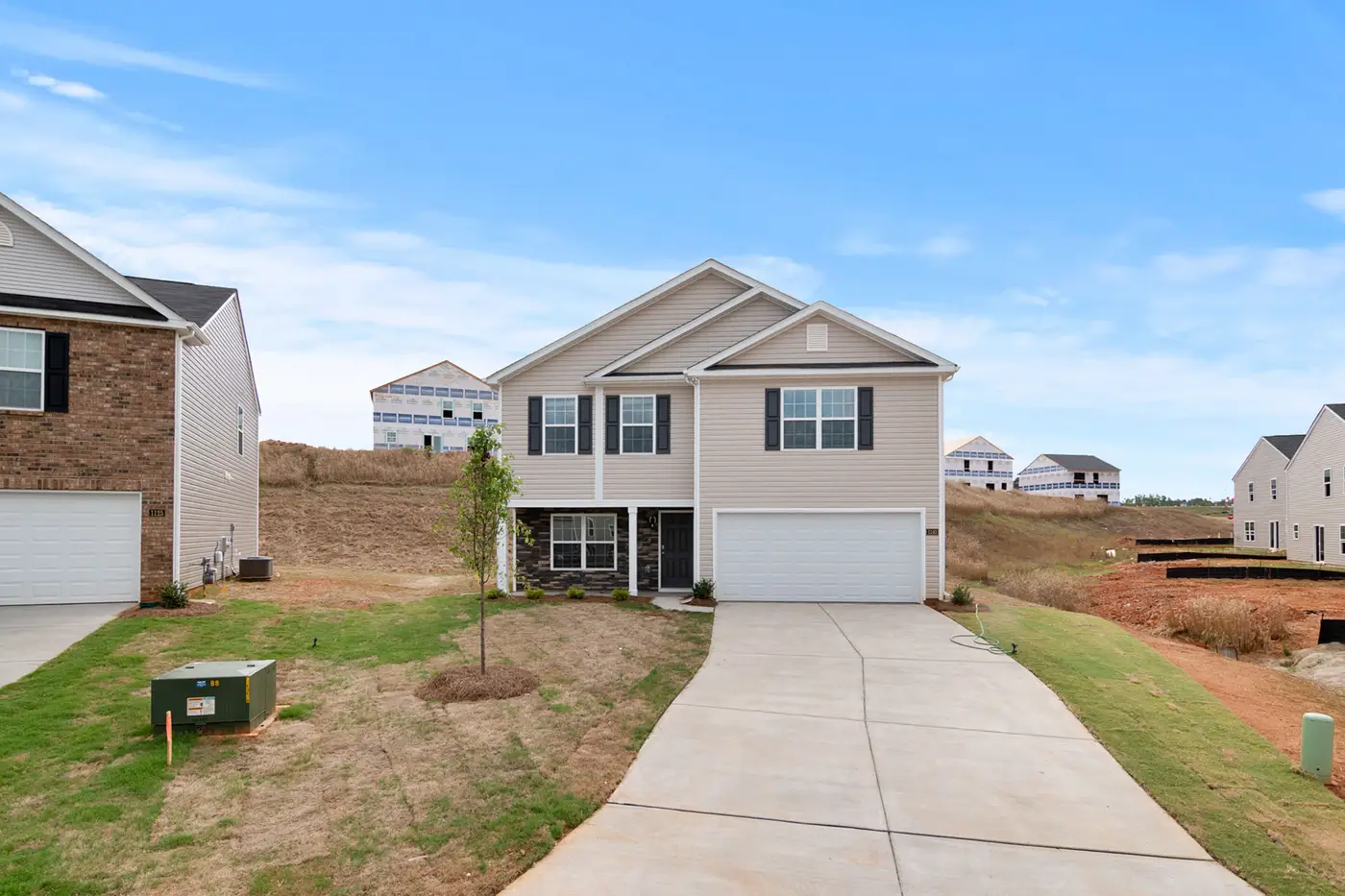
Searching "does a model home count as a housing start" usually means someone is trying to reconcile what they see in a subdivision against the permit numbers that come out weeks later. The confusion is reasonable. A model home sits on a lot, looks finished, has furniture staged inside it, and still shows up in Census starts data the same way a spec house or a presold custom build does. What doesn't count is something builders usually put on the same lot first: the sales trailer.
A model home pulls a residential permit and counts as a start; a sales trailer runs on a temporary permit and doesn't. Mixing the two up when you're scanning a subdivision can make a phase look further along, or further behind, than the presale pace supports.
The Census starts definition, and where a model home lands in it
The Census Bureau's New Residential Construction survey counts a unit as "started" the moment excavation begins for the footings or foundation. That trigger has nothing to do with who buys the house, when it sells, or what it gets used for afterward. A model home goes through the same sequence as any other unit in the phase: grading, footing excavation, foundation pour, framing. The builder pulls a residential building permit for it just like any other lot, because it is a residential structure, even though its first occupant is a sales staff and a rotating set of buyers walking through on weekends.
The model home is often the first start in a new phase. Builders break ground on it before signing a single contract, so there's something finished for buyers to walk through once the phase opens for sales.
Sales trailer vs. model home
The unit that genuinely doesn't count is the sales trailer. Most sales trailers are modular or manufactured structures trucked onto the site, set on blocks or a simple pad, and tied into temporary power and septic. There's no footing excavation, because there's no permanent foundation.
Builders typically pull a temporary-use or commercial permit for the trailer rather than a residential one, and it stays classified as a nonresidential structure for the life of the project. When the phase wraps, the trailer gets hauled back out. None of that enters the housing starts count. It was never a dwelling unit to begin with.
This is the distinction worth keeping straight if you're reading ground activity against permit data: trailer first, model home second, and only the second one is a start.
Why this matters for reading a subdivision's pipeline
For anyone trying to read builder activity ahead of the permit release, the real issue isn't whether model homes count. It's that they can distort the early read on a phase. A model home or two going vertical at the front of a subdivision looks like a demand signal when it's really a marketing fixture the builder puts up regardless of presale pace. Three or four foundations poured in month one of a new phase might be one model, one spec, and two presold units, and those four starts don't carry the same read on absorption. Lump them together without knowing which is which and the first month of a phase gets overread, then the next three get underread once presale-driven starts catch up.
Permit data alone won't give you that distinction, since the permit record doesn't tag a unit as model versus presold spec versus contract sale. It just shows a residential permit pulled on a given parcel. A monthly count of foundations poured and frames going up, broken out by submarket, at least lets you see the pace and sequencing of a phase as it happens instead of waiting for the permit batch to land and still not knowing which units were spec.
If you're trying to separate marketing starts from the ones that track real presale demand, a monthly foundation-and-frame count by metro and submarket tracks closer to ground truth than permit filings that lag by a month or more and don't make the distinction for you.
Run the model home against that pour-by-pour sequence instead of waiting on the next batch release.