Why building permits and housing starts diverge, and what the gap tells an analyst
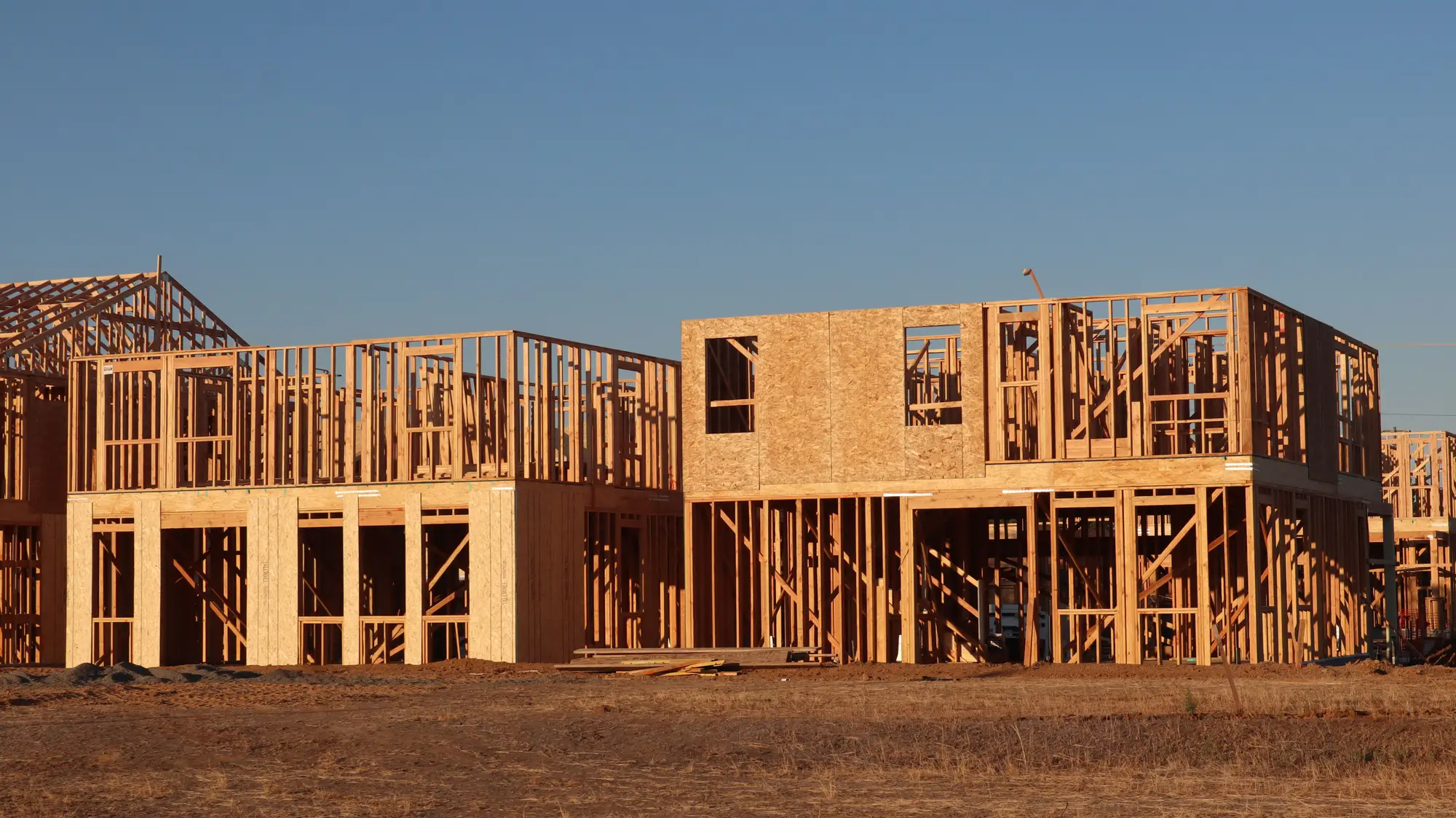
A permit is a piece of paper. A start is dirt moving. Analysts who treat the two as interchangeable end up a quarter or two behind the market without realizing it.
Census Bureau data reports both series monthly, and nationally the gap between permit issuance and the first foundation pour averages somewhere in the range of one to two months. That number is comforting and mostly useless, because it's a national blend of jurisdictions that behave nothing alike. A production builder in a finished Phoenix subdivision can go from permit stamp to poured slab in three weeks. A mid-rise in a city with design review, a TIF district, and a union labor agreement can sit permitted for a year before a single pile gets driven.
What happens between the stamp and the shovel
A permit tells you a builder cleared the local plan review desk: zoning compliance, structural sign-off, impact fees paid or scheduled. It does not tell you the builder has a crew lined up, the lot graded, utilities stubbed, or financing drawn. Those are separate gates, and each one can stall independently of the others.
Common reasons a permitted project sits before breaking ground:
- The builder is land-banking entitlements ahead of a fee increase or a cap on permits per cycle, with no intent to start for six to eighteen months.
- Utility hookup queues (water, sewer, sometimes power transformers) run behind the permit office, especially in fast-growing exurban submarkets.
- The capital stack is still being assembled. On multifamily deals especially, a builder pulls the permit to lock in entitlement terms before the equity or the construction loan closes.
- Subcontractor crews, particularly foundation and framing crews, are booked out and the builder is sequencing multiple sites against the same labor pool.
- Presale or lease-up thresholds haven't been hit yet, so the builder holds the permit as an option rather than a commitment.
None of this shows up in the permit count. The permit count just goes up.
Permit-to-start conversion rate as a signal
Because the gap isn't fixed, the ratio of starts to prior-period permits in a given metro (the permit-to-start conversion rate, loosely) moves with the credit cycle and with local capacity constraints, not just with housing demand. A falling conversion rate in a metro usually means one of two things: builders are pulling permits defensively ahead of a fee schedule change or entitlement cap, with execution lagging behind, or builders are genuinely sitting on approved product because presales softened and nobody wants to be the first one breaking ground into a buyer's market. Those two stories look identical in the permit data and very different in what they mean for near-term supply.
A rising conversion rate, conversely, usually means the backlog is clearing. Labor loosened up, financing closed, or a builder decided to push inventory into a market that firmed up faster than expected. Either way, the conversion rate is telling you something about builder intent that the permit count alone can't.
Multifamily and single-family diverge on this in predictable ways. Single-family in an established subdivision converts fast because the lot work is usually already done and the builder is running a repeatable playbook. Multifamily converts slow and unevenly because each deal has its own capital stack, its own approvals layered on top of the base permit, and a lot more that can go wrong between signing and site work.
Why the gap matters more than either number alone
If you're sizing forward supply for a metro or submarket, the permit count by itself overstates near-term completions whenever conversion is running low, and understates them whenever conversion is accelerating. The gap, tracked over time, is closer to a leading indicator of builder confidence than either raw series is on its own. A widening gap with flat or rising permits is a market where builders are hedging. A narrowing gap is a market where they've decided to go.
The trouble is that permit data and start data both come from the same lagging source, local jurisdiction filings rolled up through Census releases, so by the time you see the gap widen in the official numbers, the behavior behind it already happened months ago. Construction Starts Index tracks the one event that can't be delayed on paperwork, a foundation actually getting poured, by metro and submarket on a monthly cadence, so the start side of this ratio doesn't wait on a government release cycle to show up.
If you're modeling forward supply off the permit-to-start gap, it's worth checking what Construction Starts Index is tracking for your metros.